1. Introduction
There has been a growing recognition of the importance of workplaces as effective learning environments in Technical Vocational Education and Training (TVET). This shift in focus stems from the understanding that learning in the workplace offers unique opportunities for students to integrate theoretical knowledge with practical application, an aspect that is often lacking in traditional school-based learning. Work-integrated learning (WIL) experiences are seen as pivotal for bridging the gap between academic instruction and industry requirements, enabling students to apply classroom concepts in real-world contexts. As
| [20] | Smith, J. E., Meijer, G., & Kielly-Coleman, N. (2010). Assurance of learning: The role of work integrated learning and industry partners. In Australian Collaborative Education Network National Conference: Work Integrated Learning (WIL)-Responding to Challenges (ACEN 2010) (pp. 409-419). Paper presented at the Australian Collaborative Education Network National Conference, AUSTRALIA. |
[20]
, noted, learning is not merely a by-product of work; rather, it is intrinsic to engaging in work practice itself. Such experiences empower students to develop problem-solving skills by addressing real-world challenges, which is central to the aims of TVET. Moreover, the physical environment of the workplace plays a crucial role in shaping an individual understands of their tasks. By immersing students in this environment, industrial training provides valuable clues and models that enhance task comprehension, fostering a deeper connection between theoretical knowledge and practical skill. This type of learning is central to the concept of dual training, where workplace learning is integrated into the academic curriculum, forming the basis for a tripartite Competence Based Assessment (CBA) model
| [20] | Smith, J. E., Meijer, G., & Kielly-Coleman, N. (2010). Assurance of learning: The role of work integrated learning and industry partners. In Australian Collaborative Education Network National Conference: Work Integrated Learning (WIL)-Responding to Challenges (ACEN 2010) (pp. 409-419). Paper presented at the Australian Collaborative Education Network National Conference, AUSTRALIA. |
| [21] | Smith, T., & Brown, K. (2018). The role of industry stakeholders in workplace learning assessment. Journal of Professional Learning, 44(2), 176-192. |
[20, 21]
. Such integration helps students grasp the complexities of their future professions and ensures that they are adequately prepared to meet the demands of the job market. In Uganda, industrial training is regulated by the Directorate of Industrial Training (DIT), as outlined in the Implementation Standards of the Technical Vocational Education and Training (TVET) Policy 2019. The policy aims to enhance the alignment between industry needs and the skills developed through vocational training. Furthermore, the Uganda Business and Technical Examinations Board (UBTEB) stipulate that industrial training assessments must be conducted in accordance with the regulations outlined in Part VIII of their Rules of Conduct
| [23] | Uganda Business and Technical Examinations Board (UBTEB) Examinations Rules and Regulations 2019, Part (viii) - Rules for Assessment of Industrial Training, (Reviewed 2019). |
[23]
. This ensures that the training is not only relevant but also consistent with industry standards, providing students with a robust foundation for their careers. However, despite these regulations, the implementation of industrial training by DIT remains in progress, as the ongoing national rationalization of agencies is set to streamline the roles and responsibilities within the TVET sector. The shift toward integrating workplaces as learning venues reflects a global trend in education, as countries increasingly recognize the value of experiential learning in shaping a competent workforce. According to
| [3] | Baker, M., & Thompson, R. (2020). Industry-aligned assessment methodologies: Challenges and solutions. Education and Training, 62(4), 345-360. |
| [4] | Brimstin, J. C., & Hester, P. T. (2015). Assessing workforce competency: A systems approach. CRC Press. |
[3, 4]
, work-integrated learning provides students with the ability to develop work-specific competencies that are difficult to replicate in a classroom setting. This approach has the potential to bridge the skills gap often observed between the knowledge acquired in academic institutions and the practical skills demanded by employers. As such, the collaboration between educational institutions, students, and industry is essential for ensuring that TVET programs produce graduates who are not only academically prepared but also equipped with the practical skills needed in their respective fields. This growing emphasis on workplace learning underscores the importance of continuous assessment and feedback, particularly through the tripartite assessment model. Such assessments involve collaboration between employers, training institutions, and students, ensuring that the learning process is robust, transparent, and aligned with industry expectations. By engaging employers directly in the assessment process, the quality of TVET programs can be improved, leading to better-prepared graduates who are more adaptable and skilled in responding to industry challenges. Therefore, it’s upon this background that this study sought to examine the extent and impact of industry involvement in the assessment of workplace learning under the Uganda Business and Technical Examinations Board (UBTEB) framework, with a focus on evaluating best practices, challenges, and strategies for enhancing industry-academic collaboration in competency-based assessments.
1.1. Problem Statement
The integration of professional practice through workplace learning is increasingly recognized as a vital component of training and assessment in Technical Vocational Education and Training (TVET) systems worldwide. In Uganda, TVET is structured around a dual-training and tripartite assessment system, which envisions industry as a critical partner in producing skilled technicians. Exposure to workplace learning allows candidates to engage with new technologies, equipment, and best practices, bridging the gap between theoretical knowledge and practical application. According to the Uganda Business and Technical Examinations Board
| [23] | Uganda Business and Technical Examinations Board (UBTEB) Examinations Rules and Regulations 2019, Part (viii) - Rules for Assessment of Industrial Training, (Reviewed 2019). |
[23]
, employers are integral to this process, providing industrial training opportunities and conducting continuous assessments that verify students' competencies and readiness for the labor market. Industrial Training Programme Learning Outcomes (PLOs) are central to shaping students' technical, professional, and cognitive skills, preparing them for the demands of the workplace
| [18] | Patel, R., et al. (2023). Digital innovations in competency-based assessment. Journal of Learning and Assessment, 60(4), 214-230. |
[18]
. These outcomes include attributes such as technical proficiency, critical thinking, collaboration, and workplace adaptability
| [25] | Williams, P., et al. (2021). Enhancing relevance through industry-led assessment frameworks. Work-Based Learning Review, 55(3), 301-318. |
[25]
. However, despite the emphasis on industry involvement in Uganda’s TVET policy, challenges persist in ensuring the effective engagement of employers in the assessment of workplace learning. Insufficient employer participation can result in poor assessment practices, leading to graduates who are inadequately prepared for professional environments. This lack of engagement can contribute to inefficiencies such as material wastage, poor quality work, extended project timelines, and suboptimal equipment used in industry settings. Furthermore, the assessment methods used during industrial training, including direct observation, competency-based evaluations, and employer feedback, are essential for ensuring that students meet the expected industry standards
| [17] | Nguyen, L., & Harris, J. (2025). Work-integrated learning and assessment models: Future directions. International Journal of Workplace Education, 53(2), 99-117. |
[17]
. However, these methods are not always standardized across industries, leading to inconsistencies in evaluating trainees’ competencies
| [3] | Baker, M., & Thompson, R. (2020). Industry-aligned assessment methodologies: Challenges and solutions. Education and Training, 62(4), 345-360. |
| [4] | Brimstin, J. C., & Hester, P. T. (2015). Assessing workforce competency: A systems approach. CRC Press. |
[3, 4]
. The absence of a robust and consistent framework for industry participation in assessments, coupled with limited collaboration between employers and academic institutions, can undermine the effectiveness of Uganda's TVET system. This study, therefore, seeks to examine the extent and impact of industry involvement in the assessment of workplace learning under the UBTEB framework, focusing on the specific learning outcomes contributed by industrial training in National Certificate in Electrical Installation Systems and Maintenance (NCES) programs. The research investigated how employers’ participation influences the quality of training assessments, identify best practices, and explore strategies for improving industry-academic collaboration to enhance the overall effectiveness of workplace learning.
1.2. Objectives of the Study
The main objective of the study was to examine the extent and impact of industry involvement in the assessment of workplace learning under the Uganda Business and Technical Examinations Board (UBTEB) framework, with a focus on evaluating best practices, challenges, and strategies for enhancing industry-academic collaboration in competency-based assessments in Uganda from 2019 to 2023.
Specific Objectives of the Study
1. To establish the attributes of Industrial Training Programme Learning Outcomes (PLO).
2. To identify the employers participating in the Industrial Training Attachment Programme.
3. To determine the methods used during Industrial Training Assessment.
2. Literature Review
The evolving nature of industrial training programs and their outcomes is a key consideration for academia, industry, and policymakers, particularly in preparing students for the demands of the modern labor market. Industrial training plays a pivotal role in bridging the gap between theoretical knowledge and practical experience, ensuring that students develop the technical, cognitive, and interpersonal skills necessary for successful career transitions. This literature review explores the core attributes of Industrial Training Programme Learning Outcomes (PLO), focusing on their impact on employability and skill acquisition, as well as the crucial role played by employers in the development and assessment of industrial training programs. Drawing from various studies and training models, including Kirkpatrick’s framework for evaluating training effectiveness, this review highlights the key attributes that define effective learning outcomes, such as technical proficiency, critical thinking, problem-solving abilities, communication, and workplace ethics. Furthermore, it examines the importance of employer participation in these programs, with emphasis on mentorship, real-world exposure, and the role employers play in shaping training curricula and assessment criteria. Additionally, the review addresses the methods employed in assessing industrial training, ranging from direct observation and competency-based evaluations to digital tools and multi-stage assessment models, offering a comprehensive overview of how these approaches contribute to accurate and effective learning outcomes. The review concludes with a discussion of the challenges faced in employer participation, the need for stronger industry-academia collaborations, and future directions to enhance the quality and relevance of industrial training in the context of global economic trends and technological advancements. By synthesizing the existing literature on these topics, this review provides insights into the critical factors that influence the success of industrial training programs and their role in shaping a workforce equipped to meet the evolving demands of the labor market.
2.1. Attributes of Industrial Training Programme Learning Outcomes (PLO)
Industrial Training Programme Learning Outcomes (PLO) are integral components of educational frameworks aimed at enhancing students' readiness for the labor market. The primary focus of PLOs is to equip students with the technical, cognitive, and interpersonal skills needed for successful career integration. As industries evolve, well-structured industrial training programs ensure that students acquire practical skills that align with contemporary job market requirements
| [10] | Jin, H. (2014). Research on the Competencies for Sustainable Development of Vocational College Students in Their Career. Science and Technology Innovation Review, 24, 220-220. |
[10]
. According to various studies, industrial training enhances technical proficiency, critical thinking, and adaptability, all of which contribute to increased employability and professional success. Furthermore, such training is built upon learning models, such as Kirkpatrick's framework, which evaluates training effectiveness through reaction, learning, behavior, and results
. Incorporating experiential learning and fostering industry collaboration are essential in shaping students’ competencies, helping them bridge the gap between academic knowledge and practical application
| [3] | Baker, M., & Thompson, R. (2020). Industry-aligned assessment methodologies: Challenges and solutions. Education and Training, 62(4), 345-360. |
| [4] | Brimstin, J. C., & Hester, P. T. (2015). Assessing workforce competency: A systems approach. CRC Press. |
[3, 4]
. Therefore, the design of Industrial Training Programme Learning Outcomes (PLOs) is crucial, as it focuses on enhancing employability by developing competencies that align with industry standards. The following section delves into the key attributes that define these outcomes, showcasing how they collectively contribute to preparing students for successful careers.
Key Attributes of PLOs
Technical Proficiency and Practical Skills; One of the primary objectives of industrial training is to provide students with hands-on experience in their respective fields. According to
| [18] | Patel, R., et al. (2023). Digital innovations in competency-based assessment. Journal of Learning and Assessment, 60(4), 214-230. |
[18]
, structured industrial training improves proficiency in technical tasks, enabling students to work effectively with industry-standard equipment, software, and processes. The integration of real-world problem-solving activities within training programs further strengthens students' ability to apply theoretical knowledge to practical scenarios.
Critical Thinking and Problem-Solving Skills; Critical thinking and adaptability are essential attributes of industrial training outcomes. As workplaces become more dynamic, employers seek graduates who can analyze complex situations, troubleshoot technical challenges, and develop innovative solutions
| [15] | Martinez, A., et al. (2024). Industry engagement in workplace learning assessment: A survey of best practices. Workplace Learning Journal, 67(1), 12-27. |
[15]
. Studies suggest that exposing students to real-world industry challenges fosters resilience and enhances their ability to make informed decisions under pressure.
Collaboration and Communication Skills; Industrial training also focuses on developing interpersonal skills, including teamwork and professional communication. Effective communication, both verbal and written, is a key attribute of workplace success.
| [25] | Williams, P., et al. (2021). Enhancing relevance through industry-led assessment frameworks. Work-Based Learning Review, 55(3), 301-318. |
[25]
emphasized that industrial training improves students' ability to collaborate with diverse teams, engage in professional discourse, and present technical reports effectively.
Workplace Adaptability and Ethics; Beyond technical and cognitive skills, industrial training instills workplace adaptability and professional ethics. Organizations value employees who can quickly adjust to new environments, work under different conditions, and adhere to ethical standards. Research by
| [17] | Nguyen, L., & Harris, J. (2025). Work-integrated learning and assessment models: Future directions. International Journal of Workplace Education, 53(2), 99-117. |
[17]
highlights that industrial training programs incorporate lessons on corporate culture, compliance, and ethical decision-making, preparing students for professional responsibilities.
Assessment and Continuous Improvement; Effective PLOs require structured assessment mechanisms to measure training success.
Kirkpatrick’s framework remains a widely used model, evaluating training at four levels: reaction, learning, behavior, and results. Industry-led assessments, such as performance evaluations, self-reflection reports, and competency-based tests, ensure that students meet expected standards before transitioning into the workforce. Therefore, by incorporating these attributes, industrial training programs significantly contribute to producing graduates who are not only technically skilled but also adaptable, innovative, and ethically responsible in their professional roles.
2.2. Employers’ Participation in Industrial Training Attachment Programme
Employer participation is essential in ensuring relevant training experiences. Organizations that actively engage in industrial training programs benefit from better-prepared graduates who align with industry needs. Research highlights that employers’ roles include mentorship, skill assessment, and providing real-world exposure. Employers also influence training design by identifying skill gaps and tailoring programs accordingly
| [26] | Ramachandran, S. (2010). Vocational training and skill development in India: A case for industry participation. International Journal of Training Research, 8(2), 123–134. |
[26]
. Collaborative industry-academia models have been shown to increase training efficiency and graduate employability
| [27] | Sanjeevkumar, V., & Yanan, H. (2011). Industrial training as a strategy for enhancing graduate employability: A Malaysian case study. International Journal of Business and Social Science, 2(16), 136–145. |
[27]
. Employer participation in industrial training attachment programs plays a crucial role in bridging the gap between academic training and industry expectations. Research highlights that when employers actively engage in these programs, students gain relevant practical experience, enhancing their employability and work readiness
| [25] | Williams, P., et al. (2021). Enhancing relevance through industry-led assessment frameworks. Work-Based Learning Review, 55(3), 301-318. |
[25]
. The extent and nature of employer involvement vary across industries and organizations, but their roles generally include mentorship, supervision, assessment, and curriculum development contributions.
2.2.1. Roles of Employers in Industrial Training Attachment Programs
Mentorship and Skill Development; Employers act as mentors to trainees, offering guidance on industry-specific practices and expectations. According to
| [5] | Chen, H., & Stewart, D. (2023). Micro-credentialing and workplace learning assessment: A review. Skills and Competencies Journal, 58(2), 134-149. |
[5]
, mentorship during industrial training fosters the development of technical, interpersonal, and problem-solving skills. Structured mentorship programs enhance trainees’ ability to apply theoretical knowledge in real-world contexts, thereby increasing their job readiness.
Assessment and Performance Evaluation; Industry-based assessment is a key component of training attachment programs. Employers evaluate trainees based on competency frameworks aligned with industry standards. Research by
| [14] | Lee, C., & Morgan, T. (2022). Digital assessment tools and industry participation: A case study. Educational Technology & Society, 25(3), 245-261. |
[14]
emphasizes the need for objective performance evaluation mechanisms, including competency-based assessments, feedback sessions, and structured appraisals. These assessments help ensure that trainees meet workplace expectations before transitioning into full-time employment.
Provision of Real-World Exposure; Workplace exposure is essential for bridging the gap between academia and industry. Through industrial training attachments, students gain firsthand experience in workplace culture, professional ethics, and industry dynamics. A study by
| [18] | Patel, R., et al. (2023). Digital innovations in competency-based assessment. Journal of Learning and Assessment, 60(4), 214-230. |
[18]
found that trainees who undergo industry-based training demonstrate improved adaptability and professional behavior, which are key attributes in today’s dynamic job market.
Influence on Training Design and Skill Development; Employers play a role in shaping training curricula by identifying skill gaps and recommending improvements to academic institutions. Collaborative industry-academia models ensure that the training content remains relevant to labor market needs
| [17] | Nguyen, L., & Harris, J. (2025). Work-integrated learning and assessment models: Future directions. International Journal of Workplace Education, 53(2), 99-117. |
[17]
. For instance, technology-driven industries often require frequent curriculum updates to incorporate emerging skills in automation, data analysis, and digital transformation.
2.2.2. Challenges Facing Employer Participation
Despite the benefits of employer engagement, several challenges hinder their full participation in industrial training attachment programs. These challenges include: Time Constraints: Many employers struggle to allocate time for mentorship and assessment due to heavy workloads
| [15] | Martinez, A., et al. (2024). Industry engagement in workplace learning assessment: A survey of best practices. Workplace Learning Journal, 67(1), 12-27. |
[15]
; Lack of Standardized Assessment Criteria: Variations in industry expectations and assessment frameworks create inconsistencies in evaluating trainees
| [3] | Baker, M., & Thompson, R. (2020). Industry-aligned assessment methodologies: Challenges and solutions. Education and Training, 62(4), 345-360. |
[3]
; Limited Incentives for Employers: Some organizations hesitate to invest in training attachments due to perceived costs and lack of direct benefits
| [9] | Johnson, K., & White, L. (2017). Barriers to effective industry participation in workplace assessment. Journal of Workplace Learning, 29(6), 452-467. |
[9]
.
2.2.3. Future Directions and Enhancing Employer Participation
To enhance employer engagement in industrial training, studies suggest the adoption of structured partnerships between academia and industry. Strategies such as offering incentives for employers, developing standardized assessment criteria, and leveraging digital assessment tools can improve employer participation rates
| [16] | Miller, B., & Rodriguez, P. (2022). AI and big data in workplace assessment: Opportunities and challenges. Technology in Education Review, 48(5), 369-384. |
[16]
. The use of AI-driven analytics in trainee performance tracking is also gaining traction, providing real-time insights into skill acquisition and learning progress. Employer participation remains a critical success factor in industrial training programs. Strengthening industry-academia partnerships and addressing participation barriers will ensure that graduates acquire industry-relevant skills, ultimately contributing to workforce development and economic growth.
2.3. Methods Used in Industrial Training Assessment
Assessment methods vary but typically include direct observation, feedback from supervisors, competency-based evaluations, and structured tests. Kirkpatrick’s model remains a widely used assessment framework
, emphasizing multiple evaluation stages. Additionally, self-reflection reports, employer feedback, and standardized tests contribute to assessing trainees’ progress. Studies suggest that integrating digital tools, such as web-based assessments, enhances evaluation accuracy and provides a broader perspective on trainees’ performance
| [15] | Martinez, A., et al. (2024). Industry engagement in workplace learning assessment: A survey of best practices. Workplace Learning Journal, 67(1), 12-27. |
| [16] | Miller, B., & Rodriguez, P. (2022). AI and big data in workplace assessment: Opportunities and challenges. Technology in Education Review, 48(5), 369-384. |
[15, 16]
. The assessment of industrial training involves multiple methods designed to evaluate trainees' skills, competencies, and workplace readiness. Effective assessment ensures that workplace learning aligns with industry standards and educational objectives. Several assessment approaches have been identified, including direct observation, competency-based evaluations, supervisor feedback, and digital tools for assessment
| [25] | Williams, P., et al. (2021). Enhancing relevance through industry-led assessment frameworks. Work-Based Learning Review, 55(3), 301-318. |
[25]
.
Competency-Based Assessment; Competency-based assessment (CBA) is a widely adopted method in industrial training programs. It evaluates trainees based on their ability to demonstrate specific industry-related competencies rather than focusing solely on theoretical knowledge
| [5] | Chen, H., & Stewart, D. (2023). Micro-credentialing and workplace learning assessment: A review. Skills and Competencies Journal, 58(2), 134-149. |
[5]
. CBA ensures that students develop practical skills required in their respective professions. Studies highlight that structured competency frameworks, such as those used by the Uganda Business and Technical Examinations Board (UBTEB), align training assessments with real-world job expectations
| [17] | Nguyen, L., & Harris, J. (2025). Work-integrated learning and assessment models: Future directions. International Journal of Workplace Education, 53(2), 99-117. |
[17]
.
Direct Observation and Workplace Supervision; Direct observation remains one of the most effective methods for assessing trainees in industrial settings. Workplace supervisors assess trainees' technical skills, problem-solving abilities, and teamwork in real-time. Research by
| [18] | Patel, R., et al. (2023). Digital innovations in competency-based assessment. Journal of Learning and Assessment, 60(4), 214-230. |
[18]
found that direct observation enhances the reliability of assessments since it allows employers to evaluate both technical and soft skills, such as communication and adaptability. However, challenges such as subjectivity in evaluation and time constraints for supervisors have been noted
| [3] | Baker, M., & Thompson, R. (2020). Industry-aligned assessment methodologies: Challenges and solutions. Education and Training, 62(4), 345-360. |
[3]
.
Supervisor and Employer Feedback; Feedback from industry professionals plays a critical role in workplace learning assessment. Employers provide structured feedback based on trainees’ performance in key competency areas, including technical expertise, innovation, and professional behavior
| [14] | Lee, C., & Morgan, T. (2022). Digital assessment tools and industry participation: A case study. Educational Technology & Society, 25(3), 245-261. |
[14]
. According to
| [15] | Martinez, A., et al. (2024). Industry engagement in workplace learning assessment: A survey of best practices. Workplace Learning Journal, 67(1), 12-27. |
[15]
, structured feedback mechanisms—such as performance appraisal reports and competency scorecards—help standardize employer assessments.
Self-Reflection Reports and Portfolio Assessments; Self-reflection is increasingly recognized as a valuable tool for assessing industrial training experiences. Trainees document their learning experiences, challenges, and skill improvements through structured reflection reports
| [21] | Smith, T., & Brown, K. (2018). The role of industry stakeholders in workplace learning assessment. Journal of Professional Learning, 44(2), 176-192. |
[21]
. In addition, portfolio assessments, which compile evidence of trainees’ work such as project reports, certifications, and case studies, provide a comprehensive assessment of skills acquired
| [9] | Johnson, K., & White, L. (2017). Barriers to effective industry participation in workplace assessment. Journal of Workplace Learning, 29(6), 452-467. |
[9]
.
Standardized Testing and Skill Verification; Standardized tests are used in industrial training to measure trainees’ understanding of industry-specific knowledge and safety protocols. According to
| [25] | Williams, P., et al. (2021). Enhancing relevance through industry-led assessment frameworks. Work-Based Learning Review, 55(3), 301-318. |
[25]
, skill verification assessments, including technical examinations and industry certifications, provide a structured means of evaluating training outcomes. These assessments ensure that graduates meet minimum competency requirements before entering the workforce.
Integration of Digital Assessment Tools; the use of digital assessment tools has gained traction in recent years, improving accuracy and efficiency in industrial training evaluation. Digital platforms such as e-portfolios, AI-driven analytics, and web-based assessment tools enable real-time tracking of trainee progress
| [16] | Miller, B., & Rodriguez, P. (2022). AI and big data in workplace assessment: Opportunities and challenges. Technology in Education Review, 48(5), 369-384. |
| [18] | Patel, R., et al. (2023). Digital innovations in competency-based assessment. Journal of Learning and Assessment, 60(4), 214-230. |
[16, 18]
Highlights that AI-driven assessments help reduce subjectivity in evaluations while providing data-driven insights into trainee performance.
Multi-Stage Assessment Models; Frameworks such as Kirkpatrick’s Model of Training Evaluation remain relevant in industrial training assessment. This model assesses learning outcomes at four levels: Reaction: Evaluates trainees' perceptions and satisfaction with the training program; Learning: Assesses knowledge and skills acquired during the training; Behavior: Measures changes in workplace performance post-training and Results: Examines the impact of training on organizational productivity
. A study by
| [1] | Adams, J., & Clark, P. (2019). Workplace supervisors and assessment feedback: Strengthening industry-academic linkages. Journal of Vocational Education Research, 45(3), 210-225. |
[1]
found that multi-stage assessments, when combined with digital tools and competency-based evaluation, yield more accurate and comprehensive insights into workplace learning outcomes.
Therefore Industrial training assessment methods continue to evolve, with increasing emphasis on competency-based models, digital tools, and industry-supervised evaluations. While traditional methods such as direct observation and standardized tests remain relevant, integrating AI-driven assessments and real-time feedback mechanisms enhances the objectivity and efficiency of assessments. Future research should explore hybrid assessment models that combine traditional and digital approaches to optimize workplace learning evaluation.
2.4. Uganda’s Technical Vocational Education and Training (TVET) Policy
Uganda’s Technical Vocational Education and Training (TVET) is run on a dual-training and tripartite assessment system envisaging a demand-driven, employer-led TVET where the industry is a strategic partner in producing the competent technicians they require
| [23] | Uganda Business and Technical Examinations Board (UBTEB) Examinations Rules and Regulations 2019, Part (viii) - Rules for Assessment of Industrial Training, (Reviewed 2019). |
[23]
. The current tripartite assessment framework for TVET in Uganda recognizes continuous and final assessment. Continuous assessment is conducted during the training period as coursework, work place learning (industrial training) and real-life projects whereas final assessment includes Practical and Theory examinations as illustrated in the framework below;
Figure 1. UBTEB Competence Based Assessment Framework.
In fact
| [22] | The Technical Vocational Educational Training Policy, 2019. Ministry of Education and Sports, Uganda. |
[22]
stipulates that dual training in the training institutions and world of work should be at a 40:60 ratio and institutions are encouraged to allocate training time between theoretical and practical training in a ratio of 30:70. During industrial training, the industry supervisor awards 50% of the marks because they are in closer monitoring contact with the learner while UBTEB and the training institution verify the authenticity of the assessment during the training period. In recent years, training has been influenced by the extent of global competition and technological development. Training is a valuable tool and an investment in organizations that helps to improve profitability, reduce costs and increase employee motivation, commitment and effectiveness. To a great extent, training activities are the key drivers of organizational development and growth. Training should be applicable to performance in a current or anticipated task, providing all the necessary learning. By improving employees' ability to perform tasks required by an organization, training allows better use to be made of human resources and further gives employees a masterly over their work, leading to improved performance (training is designed to help employees perform their jobs effectively). Provision of training in companies is more cost effective and can also contribute to making the TVET offer more relevant to labour market needs. Helping employers to meet various requirements and to ‘teach’ them how to train students may be necessary to expand work-based learning opportunities. Learning in the workplace environment is different from that of the training institution's environment. Industrial raining is an important component in the training of NCES students because they get to interact with real-life problem solving related to their profession. Indeed, TVET institutions in Uganda are required to implement an industrial training component to their courses irrespective of the discipline of studies with the intention of ensuring their students are fully prepared for the job market. Mention needs to be made that industrial training does not only expose students to new equipment and work methods but also help develop innovation in the students. As such all TVET programmes in Uganda have a compulsory industrial training component
| [23] | Uganda Business and Technical Examinations Board (UBTEB) Examinations Rules and Regulations 2019, Part (viii) - Rules for Assessment of Industrial Training, (Reviewed 2019). |
[23]
. The outcome of this industrial training depends on how students are prepared for it, the challenges they face and the system administered by the institution. Both the private and public sectors source their workers from tertiary institutions and universities for work that needs specialized training. The private and public sectors recruit workers on graduation from training institutions and thereafter train them on the job. There is therefore the need to forge meaningful and purposive links between training institutions and the labor market so that graduates leaving training institutions are easily employable without having to undertake rigorous retraining. The purpose of industrial training is to ensure that there is adequate and appropriately skilled workforce in the country. Developing countries require work-oriented curricula for the purpose of increasing the competitive strengths of businesses, economic activity and the value of graduates for easy labor mobility in this rapidly changing and global society. Industrial Training and workplace learning are key instruments employed by many countries in the world to provide information to understand the relevance of hands-on skilling to the labor market. These generate vital information on the benefits of industry involvement in workplace learning assessment, and the connection between industrial training and usefulness, relevance, effectiveness and adequacy of the skills and competencies as work related values to the final job market. Most studies such as
| [12] | Karunaratne, K., & Perera, N. (2019). Students’ perception on the effectiveness of industrial internship programme. Education Quarterly Reviews: The Asian Institute of Research. https://doi.org/10.31014/aior.1993.02.04.109 |
[12]
also allude to the reduction of recruitment costs to companies with highly skilled labor acquired after industrial training.
| [24] | Van der Bijl, A., & Taylor, V. (2016). Nature and dynamics of industry-based workplace learning for South African TVET lecturers. Industry and Higher Education, 30(2), 98-108. https://doi.org/10.5367/ihe.2016.0297 |
[24]
proposes the argument that workplace-based learning for TVET lecturers is not the same as for students. While students are exposed to workplaces to provide them with orientation and initial skills for future careers, workplace-based learning for lecturers is designed to improve knowledge development competencies. TVET lecturers undertake workplace-based learning to improve their knowledge of practice and so improve their theorization and teaching skills.
| [23] | Uganda Business and Technical Examinations Board (UBTEB) Examinations Rules and Regulations 2019, Part (viii) - Rules for Assessment of Industrial Training, (Reviewed 2019). |
[23]
defines industrial training as ‘a planned effort to facilitate employee learning of job-related behavior in order to improve employee performance’. The regulations assume that the student undergoing work place learning is to be treated as an employee and assigned tasks similar to others in the work place. This asserts that training is needed so that a student can improve efficiency; and later settle quickly into an organization when employed; update knowledge and skills; be prepared for promotion to higher posts; learn skills of higher posts; reduce labor turnover and absenteeism; and promote movement from one job to another. In Australia, one of the most successful countries in hospitality and tourism training, Industrial Training is an alternative to the traditional classroom-based delivery involving structured workplace learning.
| [8] | Gyimah, N. (2020). Assessment of Technical and Vocational Education and Training (TVET) on the development of the World's Economy: Perspective of Africa, Asia and Europe. Asia and Europe papers.ssrn.com. https://doi.org/10.2139/ssrn.3541072 |
[8]
recommended among others the key policy issue of linkage of training in the training institutions with the world of work through establishing strong learning collaborations with employers and the industry. In addition, the industries and or employers were recommended to deliver workplaces learning opportunities and provide for industrial attachments for trainees. The implementation of the mentioned recommendations by some countries has been realized. On-the-job training occurs when employees acquire skills under direct supervision. Trainees learn by observing experienced employees and by working with the actual materials, personnel and machinery (Schuller and Jackson, 1999). The main advantage of on-the-job training is that transfer of training is high because workers learn in the environment in which they will readily apply the skills on the job. It is effective where a small number of people are being trained and where the consequence of error is low. In some instances, coaching of high-level executives and other employees who hold visible and unique jobs is carried out. A study by
| [7] | Gitaka, F. M. (2013). Industrial Training in Kenya A Case Study on Skilling for Building Trades in Nairobi. Nairobi University, Nairobi. |
[7]
states that Industrial training is necessitated by the increasing dynamic trends in the operating environment of industries. The purpose of industrial training shall be to boost the skills and capabilities of the workforce, empowering them to cope with the constant and unpredictable changes in the environment. Therefore, industry involvement in assessment of workplace learning is vital and implied hence better results realized.
| [11] | Kalanda, E. D. (2013). Industrial training as a workplace learning approach for hotel trainees of Kyambogo University Industrial training as a workplace learning approach for hotel trainees of Kyambogo University. Kyambogo University. Kampala. |
[11]
assessed the impact of Industrial Training as a workplace learning approach for Hotel Trainees of Kyambogo University. The study found that integration of workplace learning approaches in the training programmes of the higher education institutions have been key in bridging the gap between them and the industry. This has been facilitated by the increased realization that learning from workplaces is vital in linking the trainees and the world of work. The main findings revealed that Industrial Training activities are organized in a cycle. In addition, there was no national legislation or policy to guide the implementation of Industrial Training supplemented by unspecific guidelines or policies and relationship between the university and workplaces resulting into haphazard implementation. The constraints were found to be as a result of the nature of the organization and the systems used. The study concluded that the cyclic nature of Industrial Training makes it easy to implement. There were no formal relationships between the university and the workplaces making the learning based on majorly the input of the workplaces with less inclusion of the expectations of the university. The mismatch of the expectations of the university, workplaces and trainees were the notable causes of the constraints. The study recommends that strengthening the co-ordination of Industrial Training activities, enhancement of training in practical areas at the university, formalizing the partnerships with the workplaces and enlightenment of trainees, university staff and workplaces about Industrial Training are critical.
| [12] | Karunaratne, K., & Perera, N. (2019). Students’ perception on the effectiveness of industrial internship programme. Education Quarterly Reviews: The Asian Institute of Research. https://doi.org/10.31014/aior.1993.02.04.109 |
[12]
this study revealed that Organization support given to students is average during the internship at Host company. The concern regarding the Organization provided Well-structured training programme to cover all areas in the Company is raised in this study. Students have shown negative feedback for this and finding suggests that there should be a proper training schedule to cover the all departments in the organization. This study also revealed that students have low opportunity for training in each department in the organization. Further to above positive feedback is given for real job experience providing, transport, meal and good allowance providing.
4. Results and Discussion of the Findings
The study findings indicated the following Industrial training programme learning outcomes both from the students and industrial supervisors.
4.1. Attributes of Industrial Training Programme Learning Outcomes
For the purpose of these measurements and assessments, a series of questionnaires were administered to both industry supervisors and students to suit with the POs. The study findings revealed that for the industrial training program, six Program outcomes (PO) have been designed as follows:
Table 1. Six Program Outcomes of Industrial Training.
Program outcomes (PO) | Definition |
PO1 | Expose student to work, responsibility of an electrical engineer and the ethics of the profession |
PO2 | Ability to communicate effectively within the working environment |
PO3 | Expose students to general and specific procedure of electrical installation field which related to industry. |
PO4 | Expose student to engineering practice which is specific to his/her specialization |
PO5 | Ability to prepare technical report for the industrial training |
PO6 | Ability to use the theoretical knowledge for solving the industry problem. |
These POs need to be measured in order to assess the effectiveness of the curriculum as well as the benefits of industrial training to the students. The questionnaires were carried out to NCES students in order to assess and compare their performance before and after the industrial training program. The findings are in line with the findings with
| [2] | Amaluddin, N., Ayob, A., Osman, S. A., Omar, M. Z., Kofli, N. T., & Johar, S. (2013). Undergraduate industrial training experience: A win-win situation for students, industry and faculty. Procedia-Social and Behavioral Sciences, 102, 648-653. https://doi.org/10.1016/j.sbspro.2013.10.783 |
[2]
. Hence, this study indicates the main aspects that contribute to the program outcomes for students on their perceptions. In addition, these results also proved that students gained benefits in terms of providing and upgrading their skills through industrial training. The study findings indicate that each PO reflects a critical aspect of student development during industrial training. PO1: Exposure to professional roles and ethics; this outcome emphasizes students’ understanding of their roles as future electrical technicians/engineers and the ethical standards of the profession. Industrial supervisors reported improved student behavior in punctuality, accountability, and respect for workplace norms which were also highlighted by
| [17] | Nguyen, L., & Harris, J. (2025). Work-integrated learning and assessment models: Future directions. International Journal of Workplace Education, 53(2), 99-117. |
[17]
. The interpretation and implications of this are that Industrial training helped demystify real-world expectations for students, aligning their attitudes with professional norms such as confidentiality, quality control, and adherence to safety procedures. Therefore, this PO plays a critical role in socializing students into the culture of work, a key objective of TVET programs globally
| [10] | Jin, H. (2014). Research on the Competencies for Sustainable Development of Vocational College Students in Their Career. Science and Technology Innovation Review, 24, 220-220. |
[10]
. The ethical dimension further supports the development of trustworthy professionals, essential in fields like electrical installation where integrity and safety are paramount. And lastly, it implies that future training should embed formal ethical scenarios and reflection journals during training to strengthen this outcome. PO2: Communication in a work environment; dimensions of this PO showed that the students significantly improved in communicating both technically and socially within diverse workplace teams as emphasized by
| [25] | Williams, P., et al. (2021). Enhancing relevance through industry-led assessment frameworks. Work-Based Learning Review, 55(3), 301-318. |
[25]
. Supervisors noted better articulation of ideas, asking for clarification, and report writing. The interpretation and implication is that communication is a critical soft skill that is often undervalued in technical training. Students’ positive feedback reflects the value of immersive, real-time interactions in sharpening this skill, the data indicates that both written (technical report writing, documentation) and verbal (team collaboration, reporting to supervisors) forms of communication improved. These improvements suggest that industrial training provides an authentic context for communication development, which cannot be easily replicated in classrooms and lastly incorporating communication-focused assignments like group presentations or mock client interactions in the pre-attachment curriculum could further boost this PO. PO3: Familiarity with electrical installation procedures; findings revealed that this outcome targeted students’ understanding of general and specialized procedures related to electrical installation. Students became familiar with actual fieldwork such as wiring, troubleshooting, testing, and compliance with installation codes. The key finding was the gap between what is taught theoretically and what is practiced in industry, indicating the importance of aligning curricula with current industry procedures. Therefore, the exposure to tools and practices helped students contextualize their learning, enhancing material comprehension and knowledge retention. Industry placements thus served as a platform for validating, challenging, and expanding classroom knowledge. Updating training syllabi based on regular feedback from industries could ensure that content remains relevant and supports this outcome much more strongly. PO4: Application of specialization-specific knowledge; students were able to engage in specialized tasks relevant to their area of focus during the modules they were studying at the time such as panel wiring, motor control systems, or solar PV installations. This deepened their knowledge in chosen areas of interest which aligns with findings by
| [18] | Patel, R., et al. (2023). Digital innovations in competency-based assessment. Journal of Learning and Assessment, 60(4), 214-230. |
[18]
. The placement of students in specialized departments enabled them to begin professional identity formation and engagement in domain-specific projects helped them appreciate nuances that go beyond textbooks. Institutions should consider matching students to placements based on their stated areas of specialization or career aspirations to enhance this outcome further. Specialized certifications (e.g., for solar systems, automation) could be introduced post-attachment to reinforce competencies gained. PO5: Technical report writing skills; Students experienced notable growth in their ability to compile and present technical information. Supervisors and assessors observed structured, clear, and accurate documentation in most submissions. The implications are that technical report writing fostered critical reflection, documentation accuracy, and synthesis of complex ideas as an essential skill for engineering practice. Students were able to link work experience with theoretical frameworks, demonstrating their cognitive growth. Report writing could be further strengthened by embedding more formative assessments such as weekly logbook reviews, peer assessments, and structured feedback from both supervisors and instructors. PO6: Problem-solving using theoretical knowledge, this was perhaps the most transformative PO also maintained by
| [15] | Martinez, A., et al. (2024). Industry engagement in workplace learning assessment: A survey of best practices. Workplace Learning Journal, 67(1), 12-27. |
[15]
. Students applied concepts learned in class to address real-life issues, such as diagnosing electrical faults or suggesting improvements in installations. Problem-solving is viewed as the ultimate test of learning transfer. Students who effectively applied theory demonstrated not just memory recall, but comprehension and innovation. The challenges encountered by students varied, but many cited being trusted with real tasks once they demonstrated adequate problem identification and solving skills. This outcome affirms the need for outcome-based education (OBE), where theory is not just taught for exams but applied to solve workplace challenges and therefore institutions could replicate this by using project-based learning or simulation labs that mirror industry problems prior to the industrial attachment. Pre-training and post-training surveys of NCES students confirmed a perceived improvement across all six outcomes. Students acknowledged enhanced understanding of workplace expectations (PO1), better communication with colleagues and supervisors (PO2), and increased proficiency in electrical installation (PO3). Furthermore, they gained confidence in applying theory to real problems (PO6), with both students and supervisors citing better integration of classroom knowledge into field practice. The alignment of these outcomes with industry expectations demonstrates that industrial training bridges the gap between education and employability. Furthermore, it implies that curriculum designers should reinforce these PLOs by introducing reflective journals and industry-based case studies even before the attachment begins. Consequently, the consistent achievement of PLOs across cohorts suggests that the industrial training structure, despite its challenges, is fundamentally effective and could serve as a model for other technical programs.
4.1.1. NCES Student Enrollment
Figure 2. NCES candidates attached to industrial training 2019-2023.
The findings in
Figure 2 indicate the observed trends in enrollment; 2019/2020 had 2,921 students; 2020/2021 had 3,491 students (an increase of 19.5%); 2021/2022 had 5,029 students (a significant jump of 44%) and lastly 2022/2023 had 4,670 students (a slight drop of 7.1%). These figures reflect an overall upward trajectory in student participation in industrial training, with a cumulative growth of 60% from 2019/2020 to 2022/2023. This sustained growth suggests rising awareness of and institutional commitment to industrial training as a vital component of the NCES program. The gender disparity in enrollment in all years under review, meant that the male students consistently outnumbered female students, with no indication of the gender gap narrowing over time. This aligns with broader trends in TVET programs globally, particularly in engineering and construction-related disciplines, which have historically attracted more male than female students. The increase in enrollment, especially the sharp rise in 2021/2022, may reflect: institutions’ prioritization of industrial training within TVET policy frameworks; greater student awareness of the value of hands-on experience for employability; more stringent enforcement of industrial training as a graduation requirement by UBTEB during this period. This trend underscores that industrial training is increasingly seen not just as an academic requirement, but as a critical pathway to employment readiness and skills development. The COVID-19 Resilience and System Adaptability explains that the 2020/2021 increase occurred despite the global disruptions caused by the COVID-19 pandemic. This suggests that institutions adapted relatively quickly to ensure continuity of training, possibly through flexible placement arrangements or staggered attachments, indicating that there is institutional resilience and a strong policy push to maintain the industrial training component even under challenging conditions. This resilience is a positive signal for Uganda’s ability to implement work-integrated learning (WIL) at scale, which is essential for a future-ready workforce. The 2022/2023 Slight Decline – cause for monitoring; the slight decline in 2022/2023 (from 5,029 to 4,670) may be due to: post-pandemic economic disruptions such as closure of many small to mid-sized private organizations affecting the availability of training placements; institutional or logistical constraints in matching students to suitable employers; changes in cohort size or admissions at the institutional level. While the decrease is not alarming, it calls for ongoing monitoring to ensure that placement opportunities continue to grow alongside student numbers. Persistent gender imbalance is a structural challenge as the continual male dominance in enrollment has several implications. Cultural and societal barriers may still dissuade female students from entering male-dominated trades such as electrical installation; there may be limited female-friendly workplaces for industrial attachment, further discouraging female participation; the training environment may lack gender-sensitive policies, mentorship programs, or safety assurances for women in field-based placements. This signals a pressing need for affirmative strategies, such as: awareness campaigns to attract more female students to technical trades; gender-responsive industrial training policies, including safe workspaces and targeted support; partnerships with female-focused organizations or employers to serve as champions for gender equity in TVET; planning and resource allocation. The general increased TVET enrolment necessitates: expansion in the number and diversity of host employers; more robust supervision mechanisms from training institutions and UBTEB; scalable assessment systems to ensure quality and consistency despite larger cohorts. Failure to scale support mechanisms proportionally with enrollment growth could dilute the effectiveness of the training, leading to superficial attachments and underachievement of learning outcomes. The NCES student enrollment data therefore reveals encouraging growth in the uptake of industrial training, highlighting its perceived value among students and institutions alike. However, the slight recent decline and persistent gender gap present both a warning and an opportunity: to strengthen planning, promote equity, and future-proof the industrial training framework in Uganda’s TVET system.
4.1.2. Challenges of the Industrial Attachment Programme
Table 2. Challenges of the Industrial Attachment Programme.
S/N | Elements of Attachment challenges | Mean & Decision |
| | Level 200 | Level 300 |
1. | There is a poor attitude of partnership firms/industries towards the programme | 2.57 (Agree) | 2.67 (Agree) |
2 | Poor attitude of students towards the programme | 2.36(Disagree) | 2.11(Disagree) |
3 | Firms/industries are suspicious of students on the attachment program. | 2.69 (Agree) | 2.73 (Agree) |
4 | Students spend a lot of time in finding placement for the industrial attachment. | 3.26 (Agree) | 3.38 (Agree) |
5 | Supervision from workplace supervisors is not effective. | 2.51 (Agree) | 2.51 (Agree) |
6 | Students do not have free access to machines and equipment to work with. | 2.66 (Agree) | 2.71 (Agree) |
7 | High cost involved in pursuing the programme. | 3.06 (Agree) | 3.24 (Agree) |
8 | Lack of training materials in the firms/industries. | 2.64 (Agree) | 2.69 (Agree) |
9 | Lack of appropriate skills, tasks and jobs relating to student’s programme of study | 2.80 (Agree) | 2.76 (Agree) |
10 | Difficulty in getting attachment placement close to where the students live | 3.29 (Agree) | 3.60 (Agree) |
11 | Lack of financial support from industries to students on attachment in terms of transport and food | 3.43 (Agree) | 3.71 (Agree) |
Evidence from the results in
Table 2 demonstrated that the challenges outlined to the students were all real. As indicated by the results, the mean of students’ perception on ten challenges of the attachment programme were between the ranges of 2.51 to 3.71, thus indicating an overwhelming agreement with the challenges. The study captured students’ perceptions of eleven key challenges associated with the industrial attachment experience. The challenges were assessed by both Level 200 and Level 300 students, and the findings revealed remarkably consistent agreement across the board indicating the systemic nature of the issues rather than level-specific discrepancies. This was further confirmed by the ANOVA test (
Table 3), which showed no statistically significant difference between the two student groups (F (1, 20) = 0.172, p > 0.05).
Table 3. Summary of ANOVA.
Source of Variation | SS | df | MS | F | P-value | Fcrit |
Between Groups | 0.032073 | 1 | 0.032073 | 0.171976 | 0.682776 | 4.351243 |
Within Groups | 3.729909 | 20 | 0.186495 | | | |
Total | 3.761982 | 21 | | | | |
All the identified challenges can be found in what
| [12] | Karunaratne, K., & Perera, N. (2019). Students’ perception on the effectiveness of industrial internship programme. Education Quarterly Reviews: The Asian Institute of Research. https://doi.org/10.31014/aior.1993.02.04.109 |
[12]
identified as challenges that are associated with industrial attachment, thus, competition for attachment places from other institutions; rough and tough work environment for students; male dominated working environment for female trainees and high expectations by firms accepting students. The mean ratings for the challenges ranged from 2.51 to 3.71, indicating that most students agreed that the challenges are prevalent and impactful; the highest rated challenge was lack of financial support (Level 300: 3.71), while the least rated was poor student attitude (Level 300: 2.11), which was disagreed with. Lack of Financial Support (Mean: 3.43–3.71) was the most pressing concern; students frequently cited challenges affording transport, meals, and basic logistics during their placements. The industrial training system currently assumes significant out-of-pocket expenditure by students, which disproportionately affects those from low-income backgrounds; this may exclude economically disadvantaged students from fully benefiting from their attachment, or even from accessing high-quality placements. Institutions and government need to explore stipend programs, industry co-funding, or internship scholarships to alleviate this burden. Difficulty in Getting Placements near Students’ Residences (Mean: 3.29–3.60); Students often struggle to find suitable attachment opportunities in their geographical vicinity, especially in rural or under-industrialized areas. This logistical barrier contributes to financial stress, fatigue, and in some cases, withdrawal from the attachment. It also highlights inequities in access to quality training, with urban students having better chances of securing relevant placements. Solutions could include developing regional industry databases, institutional-industry placement MoUs, or even rotational training centers in underserved districts. Time Spent Securing Placements (Mean: 3.26–3.38), a significant number of students reported that they had to find their own placements, often investing a lot of time with little guidance. The lack of structured placement support reduces time for preparation and undermines the learning process. It calls for a centralized placement coordination system within institutions, possibly aided by digital platforms that match students with verified industries. Industry Attitudes toward the Program (Means: 2.57–2.67 & 2.69–2.73), both the general attitude of firms toward the program and their suspicion of students were noted as challenges. These results suggest weak institutional-industry linkages and a lack of trust or value placed on student contributions. Industries may see students as a burden rather than an asset due to poor orientation, lack of incentives
| [9] | Johnson, K., & White, L. (2017). Barriers to effective industry participation in workplace assessment. Journal of Workplace Learning, 29(6), 452-467. |
[9]
, or prior bad experiences. Employer sensitization workshops, recognition schemes, and clearer expectation frameworks could improve these perceptions. Limited Access to Equipment and Training Materials (Means: 2.64 – 2.71); students often lacked access to the machinery, tools, or materials necessary to engage meaningfully during attachment. According to
| [6] | Effah, B., Boampong, E., Adu, G., Anokye, R., Asamoah, J. N., & Ashanti, G. W. A. (2014). Issues of the industrial training programme of polytechnics in Ghana: the case of Kumasi Polytechnic. Journal of Education and Practice, 5(5), 39-46. |
[6]
, failure of institutions of higher learning to keep abreast with technology is as a result of numerous constraint including finances. The importance of industrial training is therefore highlighted by the fact that training institutions lack adequate equipment and training materials and the technological environment is also constantly changing making it difficult for institutions to keep abreast with the changes.
| [12] | Karunaratne, K., & Perera, N. (2019). Students’ perception on the effectiveness of industrial internship programme. Education Quarterly Reviews: The Asian Institute of Research. https://doi.org/10.31014/aior.1993.02.04.109 |
[12]
emphasizes that learners must have access to the full range of modern equipment utilized in industry for training to be effective. Limited access to equipment therefore denies students the hands-on experience that industrial training is meant to provide; it reflects a mismatch between training expectations and the resource capacity of host institutions, especially smaller firms. Screening and certification of host companies for training readiness could help ensure basic minimum requirements and standards for student exposure. Supervision and Mentorship Gaps (Mean: 2.51 for both levels); the ineffectiveness of workplace supervision was a recurring theme. Weak mentorship by the industry supervisor undermines the learning process and can lead to disengagement or frustration among students. There is a need for capacity building for industry supervisors, including training on coaching, evaluation, and communication.
4.1.3. Approaches for Effective Industrial Training
Eight approaches were used to seek the perception of the students on how to make the industrial attachment programme effective.
Table 4 reveals that mean ratings of all the items were scored above the theoretical mean showing that majority of the students agreed that all the items are good approaches to make the programme effective.
Table 4. Approaches for effective industrial training.
S/N | Approaches for effective industrial training | Mean &Decision |
| | Level 200 | Level 300 |
1 | Improve the relationship between the training institutions and industries | 3.52 (Agree) | 2.67 (Agree) |
2 | There should be an early follow-up so that supervisor can make their inputs | 3.48 (Agree) | 3.40 (Agree) |
3 | Supervision from workplace supervisors should be encouraged | 3.37 (Agree) | 3.36 (Agree) |
4 | Feedback from the industries/firms should be discussed with students | 3.26 (Agree) | 3.38 (Agree) |
5 | There should be post attachment seminar for students and supervisors | 2.51 (Agree) | 2.51 (Agree) |
6 | Workplace supervisors should be trained on how to train students on attachment | 2.66 (Agree) | 2.71 (Agree) |
7 | There should be a workshop for all stakeholders involved in the programme to reach a common consensus | 3.06 (Agree) | 3.24 (Agree) |
8 | There should be an effective supervision from both the UBTEB and industry | 2.64 (Agree) | 2.69 (Agree) |
Difference between level 200 and 300 students regarding the approaches for making the industrial attachment programme effective proved no significant difference F (1, 14) = 0.034, p> 0.05. Findings from
Table 4 disclosed that the students agreed with all the eight approaches that were proposed to improve the effectiveness of the industrial attachment programme. The proposition of improved relationship between the training institutions and industry is utmost and this outcome is congruent with
| [19] | Osman, S. A., Omar, M. Z., Mat, K., Kofli, N. T., Rahman, M. N. A., & Darus, Z. M. (2009). Outcome based education (OBE) curriculum assessment for industrial training program: Based on students’ perception. WSEAS Transactions on Advances in Engineering Education, 6(12), 454-463. (2009). |
[19]
assertions that industry can influence the learning of undergraduates to produce a potential workforce with the academic knowledge and flexibility they will require; students can learn firsthand the type of demands which will be made on them when they enter the world of work and are hence better prepared; academics and industrialists can work together on projects of mutual interest and can pool their expertise and experience to achieve the best results. Meanwhile the results also indicated that there should be an early supervision from the training institution while work place supervisors are encouraged to make the supervision achieve the needed objectives as supported by
| [3] | Baker, M., & Thompson, R. (2020). Industry-aligned assessment methodologies: Challenges and solutions. Education and Training, 62(4), 345-360. |
[3]
that effective attachment should achieve desired objectives. Society must establish what worthwhile knowledge is; desirable attitudes and relevant skills as it is the ultimate employer of the students after school and this is why the students agreed that there should be discussions for all stakeholders to contribute to the improvement of the programme. Again,
| [19] | Osman, S. A., Omar, M. Z., Mat, K., Kofli, N. T., Rahman, M. N. A., & Darus, Z. M. (2009). Outcome based education (OBE) curriculum assessment for industrial training program: Based on students’ perception. WSEAS Transactions on Advances in Engineering Education, 6(12), 454-463. (2009). |
[19]
concurs with the need for relevance of curricula but suggests that industry must play a key role in the development of curricula, thus the need for strategic link between industry and institutions of learning. Furthermore, it is undoubtedly a fact that true integration of theoretical and practical knowledge is best fostered when students transform abstract theories and formal knowledge for use in practical situations and, correspondingly, when they apply their practical knowledge to construct principles and conceptual models
| [12] | Karunaratne, K., & Perera, N. (2019). Students’ perception on the effectiveness of industrial internship programme. Education Quarterly Reviews: The Asian Institute of Research. https://doi.org/10.31014/aior.1993.02.04.109 |
[12].
From the responses in
Table 4, one could therefore conclude that if the stated recommendations are vigorously pursued, there is no doubt that the industrial training programme would be effective and produce the expected UBTEB graduate who may be capable of theorizing practice and putting theory into practice to develop expert knowledge.
4.2. Employers That Participate in the Industrial Training Attachment Programme
According to the study the following industries that provided industrial training attachment to the candidates of NCES.
Figure 3. Types of Organizations for Industrial Training.
From
Figure 3 above, it is observed that 58% of students were working and studying under Government agencies while 42% were under private organizations. This result is probably because government agencies provide broader placement access and institutional stability (but often lack innovation and advanced equipment) than private sector. Private organizations, though fewer in number, tend to offer richer, more current technical experiences but require stronger coordination and incentives to increase participation. Government agencies were found to be well-structured with supportive supervision and clear reporting lines which improved students’ communication, technical proficiency and ethical workplace behavior. Balancing both sectors and encouraging private sector growth through policy support can optimize student outcomes.
Table 5. Sectors preferred for industrial training for the period 2019 to 2023.
SECTORS OF INDUSTRIAL TRAINING | PERCENTAGE CONTRIBUTION |
Education | 5% |
Construction | 15% |
Finance | 8% |
Manufacturing | 4% |
Telecommunication | 6% |
Electricity | 19% |
Water | 9% |
Transport | 4% |
Local Government | 21% |
Hotel | 6% |
Agriculture | 2% |
Food & Beverage | 1% |
From
Table 5 above, the majority of the candidates were attached under District Local Governments with a percentage of 21%. While 19% were attached in electricity, 15% under Construction with the lowest being 2% under Agriculture and 1% under Food & Beverage. Sectoral preference for local governments, electricity and construction is likely due to increased chances for exposure to real-world engineering practices, more frequent work tasks and relatable problems than in sectors like finance, hotel and transport. However, underrepresentation in high-growth sectors like agriculture (2%), food & beverage (1%), transport (4%) and manufacturing (4%) limits the diversity of student competencies, potentially affecting national economic alignment. The mismatch between training placements and national economic priorities suggests a disconnect between industrial training and Uganda’s Vision 2040 which emphasizes industrialization, agro-processing, and value addition. Expanding partnerships in agribusiness, logistics, and agro-manufacturing could provide students with more relevant experience and prepare them for employment in high-impact sectors. Skewed access to sectoral skills with the overconcentration of students in local government, electricity, and construction may inadvertently produce sectoral skills saturation, while other sectors face shortages of trained graduates. Therefore, this imbalance calls for strategic placement planning, possibly through quotas or incentives that promote participation of underrepresented sectors. Diversifying placement sectors is essential for building a resilient, multi-sectoral TVET workforce that can adapt to labor market fluctuations. The private sector participation (42%) although significant, is still less than the public sector. Sectors like finance (8%), telecommunication (6%), and hotels (6%) indicate some willingness from private firms to host trainees, but many still remain reluctant. Private sector organizations may be deterred by concerns over productivity loss by their staff during student supervision a challenge observed by
| [21] | Smith, T., & Brown, K. (2018). The role of industry stakeholders in workplace learning assessment. Journal of Professional Learning, 44(2), 176-192. |
[21]
, lack of incentives, or unclear training frameworks. To improve participation, the government and institutions should; offer tax incentives or public recognition to firms that consistently provide high-quality attachments; develop training agreements (MoUs) that clarify expectations and reduce uncertainty for employers; establish institution-led orientation and mentorship support to reduce the burden on companies. Students in rural or remote institutions may have even fewer opportunities in private sector firms, this emphasizes the need for decentralized placement networks, sector-balanced policies, and location-based incentives to promote equitable training access. Industrial training effectiveness can also be amplified by developing Public-Private Partnership (PPP) models where private industry co-develops training content and hosts students while government supports coordination and quality assurance. The low uptake from several industrial sectors suggests that current employer engagement efforts may be ad hoc, informal, or unstructured. Without exposure to dynamic, high-growth industries, students may graduate with outdated or mismatched skills; sector diversity in training placements enhances graduate adaptability and competitiveness in both domestic and regional labor markets. There is an urgent need to establish a national industrial training policy and coordination framework that includes: a centralized database of verified, willing host organizations; sector-specific training plans that match students’ areas of specialization to national economic priorities; stronger public-private collaboration, including joint reviews of training curriculum and student outcomes. Development of such a framework would take into account a national sectoral demand analysis to align attachment opportunities with industry needs. The data on employer participation provides crucial insight into the current concentration, gaps, and inefficiencies within Uganda’s industrial training ecosystem. While government institutions form the backbone of student placements, there is an urgent need to expand engagement to a wider range of sectors, particularly within the private and informal economy. Doing so would not only enhance the quality and relevance of student learning but also ensure that NCES graduates are equipped with the diverse competencies needed in a dynamic, evolving job market.
4.3. Assessment Methods Used During Industrial Training
The assessment methods used during industrial training in Uganda’s Technical and Vocational Education and Training (TVET) system are deeply embedded within a tripartite evaluation model, emphasizing employer involvement, institutional oversight, and student self-reflection. Although the industry supervisor carries out daily and weekly assessment, the student also makes a self-evaluation through an industrial training report and the final assessment mark of industrial training course is consolidated by the department coordinator at the training institution. The assessment forms and templates are according to guidelines issued by the TVET assessment body - UBTEB.
Table 6. Industrial training course assessment.
Item | Marks (percentage) |
Assessment by industry/ field Supervisor | 60% |
Assessment by Institution’s Supervisor | 25% |
Field attachment report | 15% |
While in the industry, students use the logbook which is a daily record of all the related activities that they perform during their training period. These logbooks are checked weekly by the direct supervisor in the industry to ensure continuous learning and improvement; this was also emphasized by
| [14] | Lee, C., & Morgan, T. (2022). Digital assessment tools and industry participation: A case study. Educational Technology & Society, 25(3), 245-261. |
[14]
. The industry/field supervisor’s evaluation accounts for the majority of the score (60%), highlighting the emphasis on in-situ performance during attachment. This assessment is centered on real-time observation of student performance as observed by
| [18] | Patel, R., et al. (2023). Digital innovations in competency-based assessment. Journal of Learning and Assessment, 60(4), 214-230. |
[18]
, including attendance, practical skills, time management, discipline, problem-solving, and adherence to safety protocols. The strength of this method is that it aligns well with the goals of TVET education, which focus on competency-based training and employability. There is also an aspect of the workplace assessment which requires the industry supervisor to fill in a summative assessment form, to directly assess the overall student performance during their training period as proposed by
| [15] | Martinez, A., et al. (2024). Industry engagement in workplace learning assessment: A survey of best practices. Workplace Learning Journal, 67(1), 12-27. |
[15]
. This enables assessment of the program learning outcomes. The industry/field supervisor uses an assessment form also provided by the TVET assessment body as shown below;
Table 7. Industrial Training Assessment Form for Field/industry Supervisor.
Name of Industry/Employer | GRADES | Score | Area of Improvement |
Very Good | Good | Fair | Weak |
| Area of Assessment | Marks | >=80% | (70-79)% | (60-69)% | <=49% | | |
A | Attendance (% age of days and times within the days present) | 7 | | | | | | |
B | Work Performance | 12 | | | | | | |
Co-operation with other staff | 3 | | | | | | |
General ability to use various equipment, machines or plant in the industry | 3 | | | | | | |
Flexibility-willingness to learn from various sections in industry | 3 | | | | | | |
Job planning | 3 | | | | | | |
C | Initiative or Innovations | 8 | | | | | | |
Problem-solving | 4 | | | | | | |
New ideas on improvement for efficiency of performance or operations | 4 | | | | | | |
D | Time Management | 6 | | | | | | |
Reporting on time | 2 | | | | | | |
Leaving at specified break-off or stoppage time | 2 | | | | | | |
Meeting deadlines on assignments given by supervisors or instructors | 2 | | | | | | |
E | Discipline and Safety | 10 | | | | | | |
Use of right equipment for right job | 2 | | | | | | |
Obeying instructions given and carrying them out | 2 | | | | | | |
Proper handling of equipment and or materials | 2 | | | | | | |
Ability to practice safety measures in the workplace | 2 | | | | | | |
Knowledge of first aid procedures in case of accident | 2 | | | | | | |
F | Practical Skills | 15 | | | | | | |
Ability to put into practice training instructions from instructors or supervisors | 3 | | | | | | |
Ability to relate theoretical knowledge with practical applications | 3 | | | | | | |
Proper use of manuals and interpretation of drawings | 3 | | | | | | |
Ability to carry out trouble shooting on equipment, (put right mistake in work or finishing) | 3 | | | | | | |
Ability to service and repair equipment (clean and maintain tools and workplace) | 3 | | | | | | |
G | General Remarks (other assessment at discretion of examiner) | 2 | | | | | | |
This standard assessment tool for industry supervisors comforts the findings of
| [3] | Baker, M., & Thompson, R. (2020). Industry-aligned assessment methodologies: Challenges and solutions. Education and Training, 62(4), 345-360. |
[3]
that the subjectivity and variability of supervisor engagement across industries and absence of standardized workplace assessment frameworks can affect the reliability and consistency of assessments. Supervisors may have different expectations, may not be trained in assessment, or may lack time to provide comprehensive evaluations. The policy recommendation is that there is a need for standardized assessment rubrics and orientation workshops for industry supervisors to ensure fairness, objectivity, and consistency across different placement sites. The institutional supervisor's assessment, accounting for 25%, serves as a quality control mechanism. Institutional supervisors conduct periodic visits, review student logbooks, and engage in direct interviews to validate the training experience. Although often limited by logistical challenges such as limited staff, lack of transport, or insufficient visit frequency, this provides a secondary layer of accountability and academic oversight to complement field-based evaluations. It also allows institutions to maintain visibility into student experiences and identify problematic placements. Supervisors may only make a single visit, or sometimes rely on indirect evidence rather than hands-on evaluation. It is recommended that institutions develop rotational supervision teams, use digital assessment tools
| [16] | Miller, B., & Rodriguez, P. (2022). AI and big data in workplace assessment: Opportunities and challenges. Technology in Education Review, 48(5), 369-384. |
| [18] | Patel, R., et al. (2023). Digital innovations in competency-based assessment. Journal of Learning and Assessment, 60(4), 214-230. |
[16, 18]
, and conduct mid-term evaluations to ensure ongoing support and effective feedback to students. Once the students have completed their training, the logbook is submitted and assessed by the department coordinator with the help of other lecturers. Students also have to prepare a report which describes brief technical aspects of their training period
| [2] | Amaluddin, N., Ayob, A., Osman, S. A., Omar, M. Z., Kofli, N. T., & Johar, S. (2013). Undergraduate industrial training experience: A win-win situation for students, industry and faculty. Procedia-Social and Behavioral Sciences, 102, 648-653. https://doi.org/10.1016/j.sbspro.2013.10.783 |
[2]
. Grades for each area of assessment may be marked out of 100 and the score reduced to give a maximum corresponding to the marks. As regards Student Field Attachment Report (15%); the final report offers students a structured opportunity to reflect on their learning experiences, demonstrate understanding of industry practices, and synthesize knowledge from both practical and theoretical perspectives as stated by
| [21] | Smith, T., & Brown, K. (2018). The role of industry stakeholders in workplace learning assessment. Journal of Professional Learning, 44(2), 176-192. |
[21].
The report allows for assessment of cognitive learning outcomes, such as technical writing, analytical thinking, and concept integration. It promotes reflective practice and lifelong learning habits. The small weighting (15%) may undervalue critical thinking and reflection, which are essential for students to contextualize their industrial experiences and grow intellectually. Institutions could consider introducing formative assessment checkpoints for the report (e.g., outline, draft, final submission) and increase its weighting or supplement it with a presentation or viva voce at higher academic levels, which can also test communication skills. One aspect which is necessary to help improve the program but is currently not being given any marks is the industry visit by the assessment body (UBTEB). The Board conducts verification visits and monitors training standards which efforts are not formally part of the scoring system. Through these visits, feedback is obtained from the employers regarding the student performance, and on the industrial training program as a whole. This visit also gives UBTEB an opportunity to assess the suitability of the company in providing a useful training program. The absence of UBTEB’s findings from the assessment framework limits its impact on quality assurance and may discourage institutions or firms from responding to their feedback seriously. It is imperative that UBTEB’s quality verification reports are integrated into a moderation or scaling mechanism, which could adjust or validate scores based on compliance with training standards. The current assessment methods were also found to lack peer or self-assessment mechanisms that promote critical self-reflection, personal accountability, and peer benchmarking, which are all valuable in professional development. Introduction of reflective self-assessment tools where students evaluate their own strengths, weaknesses, and goals during the training period and peer feedback could also be integrated during report presentations or post-attachment seminars. The findings show that, the current assessment method is closely aligned with the six identified Program Outcomes (POs)—especially: PO1 (Professional exposure), PO4 (Specialized practice) and PO6 (Application of theory in real-world problems), However, PO5 (Technical report writing) and PO2 (Communication) could be better supported with additional evaluative components like oral defense, report presentations, or peer reviews. Therefore, the industrial training assessment model in its current form is broadly aligned with the TVET philosophy of hands-on, workplace-oriented learning. However, it relies heavily on external supervisors and underutilizes structured academic assessment tools. Strengthening the balance between field-based, academic, and reflective evaluations—while incorporating UBTEB oversight—will enhance the validity, reliability, and fairness of the entire process. A more robust, inclusive, and scalable model would not only improve learning outcomes but also raise the overall quality and reputation of Uganda’s industrial training system. The overall reflections and broader educational implications of the assessment methods are that there ought to always be industry integration during curriculum development. The consistent assessment in the workplace of all six POs would be more efficient with further integration of industry insights into course content, especially through periodic review workshops. On assessment validity; while Industrial Training POs are assessed through reports, supervisor evaluations, and logbooks, some outcomes such as ethics and teamwork require more nuanced, formative assessment tools like rubrics, reflection essays, or structured observation. Embedding these formative assessment methods for all POs progressively throughout the academic journey rather than waiting until industrial attachment would ensure deeper and more sustainable development of student competencies and workplace learning.






 Share This Article
 Twitter
 Linked In
 Facebook
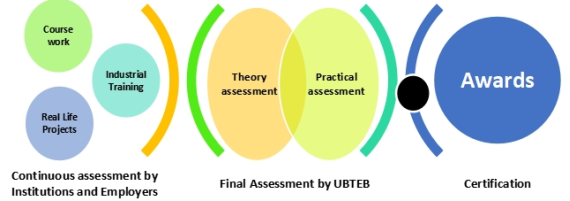
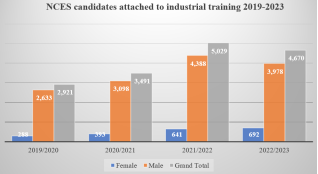
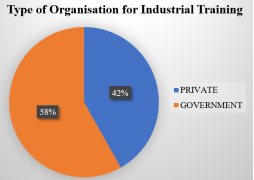
 Copy
Copy Download